
- 30 September 2026
- Posted by: EYATH S.A.
- Category: All News
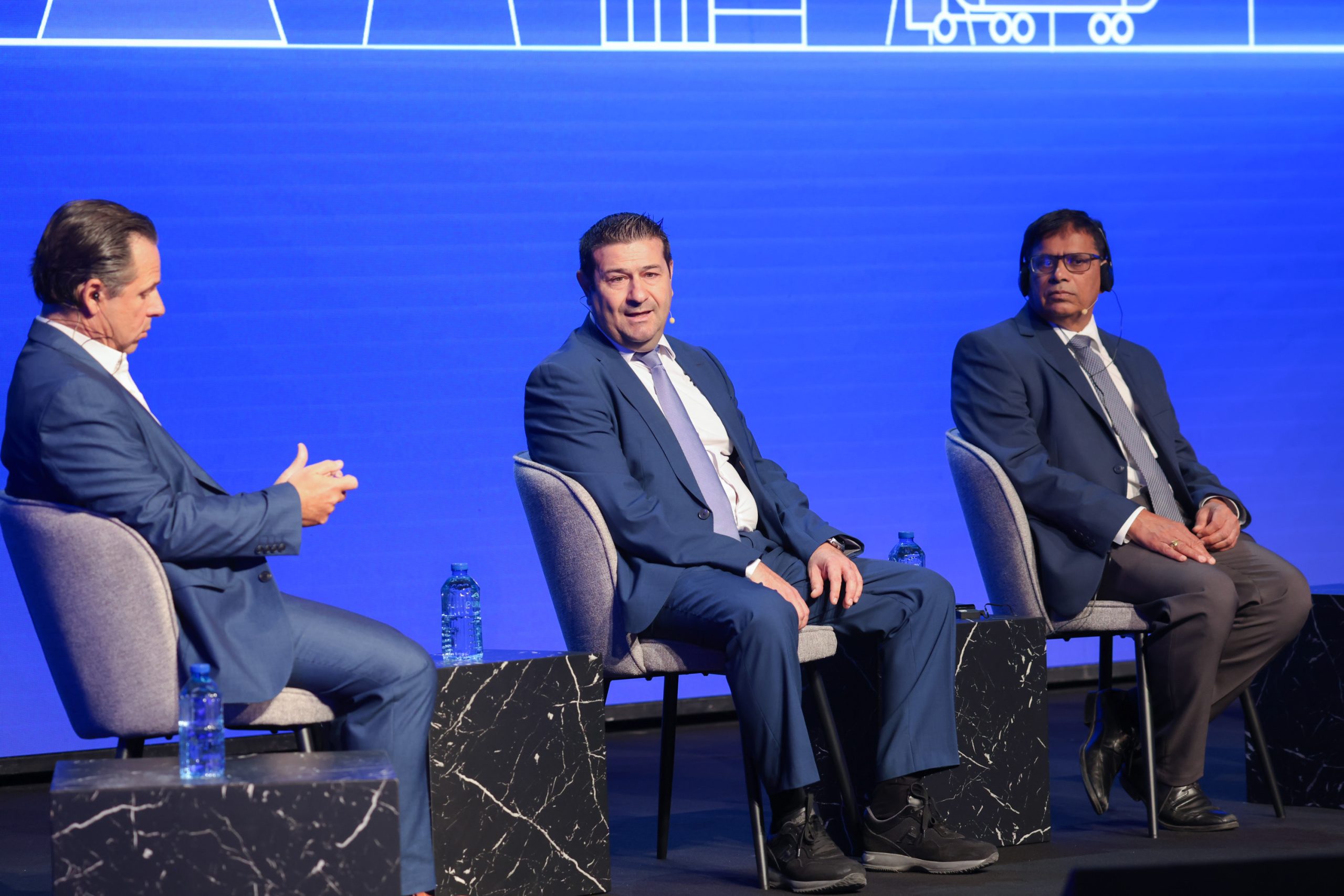
The need to prioritize water supply projects and ensure rational water management—coupled with the use of appropriate funding mechanisms—was highlighted during a panel discussion titled “Water, the Climate Crisis, and the Need for New Infrastructure to Shield Against Extreme Weather Events” at the 9th Infrastructure and Transport Conference (ITC 2026), currently taking place at the Athens Concert Hall.
Anthimos Amanatidis, CEO of EYATH, described the climate crisis as the greatest systemic threat facing water and sewerage utilities. He noted that the situation in Greece is further exacerbated by unsustainable management practices and the over-extraction of water resources, primarily for agricultural use. “At EYATH, we are pursuing a two-pronged strategy: modernizing our infrastructure and increasing available water resources. To this end, we are ensuring that we do not rely on a single water source but have alternative solutions in place,” he stated, citing desalination, boreholes, dams, and reservoirs as examples of such alternatives. Furthermore, by leveraging new technologies—such as “smart” water meters and, of course, Artificial Intelligence solutions—EYATH has, as noted, reduced non-revenue water from 35% to 26% over a five-year period.
With an investment program totaling approximately €360 million running through 2029, “EYATH aims to increase water production by doubling the capacity of the water treatment plant, as well as to expand into new areas.” Mr. Amanatidis made specific reference to environmental initiatives and the application of circular economy principles to the company’s operations: “Over the last six years, we have managed to reduce energy consumption per cubic meter of water by 15% and our carbon footprint by 45%.” “We systematically reuse water at our wastewater treatment plant in Sindos; by upgrading the facility, we can make the treated water available for irrigation in the Thessaloniki plain during periods of water scarcity.”
“At the TIF [Thessaloniki International Fair], we introduced the term ‘water intelligence’ and showcased new capabilities for the digital monitoring and management of our water systems, leveraging satellite data, sensors, geospatial technologies, modern analysis methods, and, of course, artificial intelligence,” noted Mr. Amanatidis.
Regarding the partnership with the European Investment Bank, he described it as a pivotal step toward creating a new water management strategy for both Thessaloniki and Chalkidiki. “Through the recent reform, we are integrating 25 water supply, sewerage, and irrigation entities into our company. This now requires concrete investment planning, clear priorities, and the utilization of all available financial instruments,” he pointed out, setting the goal of establishing a resilient and financially sustainable system for the coming decades.
