
- 5 November 2025
- Posted by: EYATH S.A.
- Category: All News
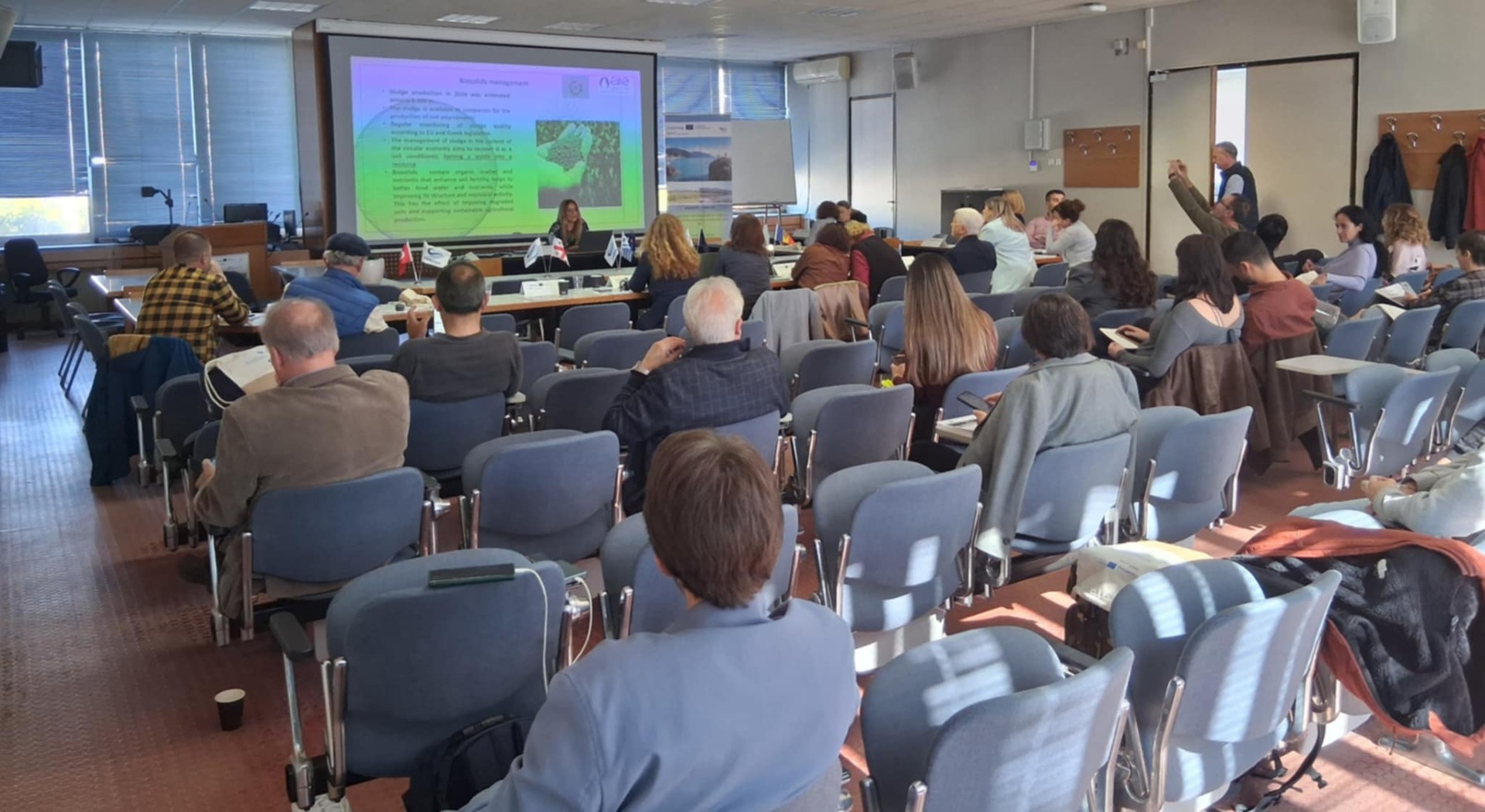
EYATH highlighted the challenges posed by the new EU directive regarding the operation of wastewater treatment plants during a seminar held in late October at the Aristotle University of Thessaloniki’s Faculty of Engineering. The event took place within the framework of the Interreg program “Cooperation and Awareness for Pollution-free and Environmentally Sustainable Black Sea” (CARE SEA).
Evi Karabougiouki, a chemist and Head of EYATH’s Environmental Monitoring Department, outlined the successive steps the company has taken over the past decade to align with the requirements of the new Urban Wastewater Treatment Directive (UWWTD 2024/3019). As she explained, “The Thessaloniki Wastewater Treatment Plant employs an advanced secondary biological treatment process using the activated sludge system; this achieves the removal of organic load and a significant reduction in nitrogen and phosphorus levels, ensuring compliance with legislative requirements and the protection of the marine receiving waters and the environment.” At the same time, by utilizing the sludge as a soil conditioner, nitrogen and phosphorus nutrients are returned to the soil in line with circular economy principles, said Ms. Karabougiouki, noting that “the company systematically promotes the transition to a circular economy by leveraging by-products of its operations and reducing waste generation.”
EYATH has already initiated strategic planning for quaternary treatment projects aimed at removing emerging pollutants (microplastics, pharmaceuticals, PFAS), upgrading its chemical laboratories, and securing the necessary environmental permits. “EYATH has already met 80% of the energy target set by the new directive, thanks to upgrade projects that have already been completed and put into operation at the Thessaloniki Wastewater Treatment Plant,” Ms. Karabougiouki clarified.
The “Interreg Cooperation and Awareness for Pollution-free and Environmentally Sustainable Black Sea – CARE SEA” program is an eight-country cross-border cooperation initiative focused on monitoring and protecting water bodies receiving treated effluent.
